LA HISTORIA DE UN PADRE QUE CONVIRTIÓ SU AMOR EN UNA AVENTURA
Visita nuestra página web http://www.alamarlapelicula.com/

martes, 12 de julio de 2011

“EL QUE VIVE EN EL MAR, VIVE FELIZ"

Durante la visita de Pedro González-Rubio al Festival de Cine de San Francisco, en donde ganó el premio a Mejor Nuevo Director, el director de Alamar fue entrevistado por Iñaki Fernandez de Retana del periódico bilingüe El Tecolote:

Iñaki- ¿De dónde eres? ¿Dónde estudiaste cine?
Pedro- De todas partes. Soy de la Ciudad de México, pero he vivido en Playa del Carmen siete años, que está cerca de Banco Chinchorro. Estudié cine en Londres.

UNESCO declaró a Banco Chinchorro reserva natural en el año 1996, lo que despertó interés en preservar la naturaleza de este lugar tan bello. ¿Tuvo esto que ver con el escoger esta localización para tu película?
Escogí esta localización, no por fines políticos ni ideales ecologistas. Yo no soy ni ambientalista ni ecologista. Fue más por el lugar y la manera en cómo viven sus habitantes, los pescadores allí. Mi fascinación surgió de ver cómo vivían.

Un interés etnográfico…
No, mucho más estético. Ésa fue mi decisión por filmar ahí. Y la manera en cómo viven, cómo tienen los ‘palafitos’, las casas encima del agua. Siento que esa estética refleja varios simbolismos que quería retratar. Como el regresar al origen y estar rodeado de agua, como si fuera el vientre de la madre. Y el palafito fuera como un ombligo y todo lo demás agua.

En tu película no hay mucho diálogo, dejándose mucho abierto a la interpretación. Por ejemplo la relación de Natan con el abuelo, el padre de Jorge. Aunque se ve en la película, la relación se muestra sin palabras. ¿Lo hiciste a propósito?
Yo no trabajé con un guión. Tenía una escaleta, que era como una columna vertebral de donde partía la historia a donde terminaba. Y no escribí diálogos. Los personajes se interpretan a ellos mismos y lo único que hago es juntar varios elementos. Al abuelo lo conocí cuando estaba buscando la localización. Y después conocí a Jorge. Inicialmente iba a ser una historia distinta, pero cuando conocí a Natan, sabía que iba a ser la historia de despedida de un padre y un hijo.
Me enfoqué en la pesca diaria, y a partir de ahí fui tejiendo sutilmente la historia dramática. No me interesaba sobre explicar ni la despedida, ni la situación, ni las relaciones. Sino simplemente cómo cada cosa, cada personaje, cada localización, cada elemento es símbolo de algo más grande.
Está el hombre en sus tres facetas: el hombre viejo, el hombre joven y el niño. Y cada uno cumple su función. El sabio, el hombre joven que está como perdido y regresa a sus orígenes para recordar lo que ha olvidado, y su hijo que viaja a este lugar para descubrir e iniciarse en un mundo ancestral que ha ido de generación en generación.
Pero no el caso de ellos en específico, sino de la humanidad en sí. La pesca es una de las actividades más ancestrales, más antiguas del mundo. El significado de estas actividades tan humanas se está perdiendo día a día, está siendo devorado por la industria. Como dice Natan en la película, que en Italia no se pesca, que el pescado se compra.

La naturaleza es muy importante en tu película. ¿Cuál fue tu intención al seleccionar este tema?
Yo quería que la gente estuviera inmersa durante la duración de la película. Que fueran mojados por el mar, por la brisa; que sintieran el calor, el sol, la arena; que sintieran las hormigas caminando por la madera. Quería hacer una película de sensaciones.
Recuerdo la infancia con un poco de nostalgia. Un nostalgia positiva. En esa etapa viví algo…, descubrí tantas sensaciones, y todo era tan… Los colores eran muchísimo más brillantes que hoy en día para mí. La temperatura… Todo tenía una dimensión muy grande, como a flor de piel. Y recuerdo esos momentos como algo que estuvo, que es parte de mí y quizás como adulto no puedo volver a sentir esos momentos al descubrir tu alrededor.
Quería explorar eso a través de esta película, esos sentimientos, esas sensaciones. Y al final termina como una burbuja rompiéndose.

¿Experimentaste con algo en “Alamar”?
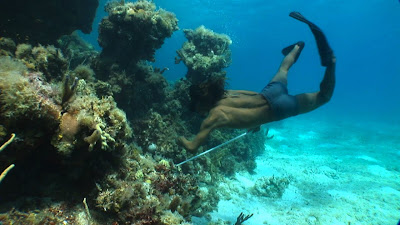
Las tomas submarinas fue algo nuevo para mí, y dirigir bajo el agua. Fue muy complicado. También experimenté haciendo las mismas actividades que mis personajes. Era como parte de la familia, yo también pescaba… Y creo que eso me permitió tener mucha más intimidad con la historia y con los personajes, y poderme acercar más con la cámara. Ah…, y también editar, porque es la primera vez que edito una película.

¿Podrías hablar un poco de la industria cinematográfica mexicana?
Comparada con la industria estadounidense es muy pequeña. Pero para ser un país latinoamericano creo que en Argentina, Brasil y México es donde más cine se produce. Es interesante ver que muchas cintas mexicanas están obteniendo reconocimiento alrededor del mundo. A la gente sí le gusta nuestro cine. Al no tener grandes presupuestos, nos permite explorar nuevas formas de hacer cine. Y de ahí surgió “Alamar”. Se hizo con muy poco presupuesto. En video, con un crew de dos.

Visualmente la película se ve muy completa, para haber sido rodada con un crew de dos personas. 
¿Qué tanto difiere el resultado final a como te la imaginabas antes del rodaje? Por ejemplo “Blanquita”, eso fue algo que pasó naturalmente, fue un pajarito que se apareció y decidisteis incluirlo en la película.
Tenía una estructura, un tratamiento. Pero yo no me amarro a algo completamente estructurado a priori. Consiste en estar atento a todo lo que hay alrededor. Nada es de chance, todo es destino. Yo llevo cinco años haciendo documentales y no es by chance. No todo planeado tampoco. Es parte del destino de uno.

lunes, 11 de julio de 2011

#1 EN TOP TEN DE REVERSE SHOT 2010

" (...) Of course, rules are rules, and, despite our increased disillusionment with the film community and the changing landscape of filmgoing, we continue to do this top ten as we have in recent years—polling our major contributors from 2010 to determine only the best films that were released only in the United States in the past twelve months (in other words, those films that moviegoers had a chance of seeing theatrically.) The highest ranked film received the most votes, and so on.

1. Alamar
How did Pedro González-Rubio’s devoutly modest film end up at the top of Reverse Shot’s best-of-2010 list? There are many other films in this lineup that are more ambitious, more formally daring or complex, more incisive, more passing strange, more masterful than this charmingly slight tale of father-son bonding set against the admittedly spectacular landscape of Mexico’s Chinchorro coral reef. But level of achievement is only one factor in such an endeavor. What Alamar is—in its lovely casualness, its guileless blurring of documentary and fiction, the unforced enviro-political resonance of its return-to-the-land (rather to the sea) chronicle—is certainly laudable; what it represents is something greater. (...)"


Para leer la nota completa:  http://www.reverseshot.com/article/reverse_shots_best_2010

viernes, 8 de julio de 2011

EN LA BERLINALE 2010

La mexicana Alamar llenó la sala
Alia Lira Hartmann
 
Periódico La Jornada
Sábado 13 de febrero de 2010, p. 8
 
 
"Berlín, 12 de febrero. Alamar, película del joven realizador mexicano Pedro González Rubio se presentó en la Berlinale donde inauguró la sección Generación, dedicada al público infantil. Alrededor de mil asistentes abarrotaron la sala donde se exhibió, lleno total donde predominaba el público infantil conformado por estudiantes de escuelas de la ciudad, con las cuales la Berlinale realiza proyectos especiales para llevar a los más pequeños a las salas de cine para formar a los cinéfilos del futuro y despertar el interés por la cinemaografía fuera del giro comercial.

El jurado de la sección Generación está conformado por especialistas y 12 pequeños, quienes deciden cuál de las 60 producciones se llevará el primer premio de esta categoría.
Alamar, cinta que se rodó en el Caribe mexicano, en la reserva natural Banco Chinchorro, protegida por la Organización de las Naciones Unidas para la Educación, la Ciencia y la Cultura, despertó el interés del público alemán, porque documenta la relación entre padre e hijo, quienes viven separados en mundos totalmente contrastantes, y porque registra la relación del hombre con la naturaleza.
(c) Berlinale 2010, Max Kullmann


El pequeño actor

La película tuvo excelente acogida, pero quien acaparó la atención durante la presentación fue el pequeño Natan Machado Palombini, protagonista de la cinta, quien dentro de dos semanas cumplirá siete años. Natan acudió a Berlín acompañado por su madre, Roberta Palombini. El pequeño no es actor profesional, por lo que se sintió agobiado al final de la proyección, incluso rehusó subir al escenario. No obstante, parecía disfrutar de su papel de estrella al momento de repartir autógrafos.
Pedro González Rubio, director, escritor, fotógrafo y productor de Alamar, señaló que la filmación de la película tardó un año. Ahora compite en el circuito internacional de festivales y cosecha aplausos. El festival de Rotterdam la premió la semana pasada y ahora compite en la Berlinale por el Oso de cristal."

Fuente: http://www.jornada.unam.mx/2010/02/13/espectaculos/a08n2esp


jueves, 7 de julio de 2011

¿CUALES SON LAS INFLUENCIAS CINEMATOGRÁFICAS DEL DIRECTOR PEDRO GONZÁLEZ-RUBIO?, ¿QUÉ FUE LO QUE DEFINIÓ LA HISTORIA DE ALAMAR?...

Interview by Eric Lavallee on Jul 01, 2010
Source: IONCINEMA.com Feature

"Winner of the prestigious Tiger Award at Rotterdam Int’l Film Festival and an audience favorite everywhere it has been since it began it's world film festival run starting at TIFF last year, for this month's IONCINEPHILE we present Pedro González-Rubio and his feature film debut, Alamar. Film Movement are releasing this tale about the bonding of a father and son set in the splendor of nature starting this Wednesday at the Film Forum in New York.

Eric Lavallee: During your childhood…what films were important to you?

Pedro González- Rubio: I remember growing up with a film made by my grandfather about a boy who learns to play the violin, he did "Yanco" in 1960 and against all odds he was able to finish this film. This is probably one of the milestones from independent mexican cinema of the 60s. My mother had a video copy of Lamorisse "Le Balloon Rouge" which she played to me very often. I loooved Peter Pan too.

Lavallee: During your formative years what films and filmmakers inspired you? And at what point did you know you wanted to become a filmmaker?

González- Rubio: The film that influenced me the most to choose this career was Cinema Paradiso, I saw it with my mother in an old art deco cinema called Bella Época. I must have been around 12 years old. I could feel very close with the characters emotions towards the magic of movies, so when we walked out of the thatre I remember telling my mother I was going to make films. Then at film school I discovered Godard and Truffaut, their energetic film style inspired me to break with the canons that I was learning at that same time. I mean, at school I learned the basics of filmmaking, I specialized in photography and this gave me the opportunity to know all the departments of cinematography, from electrician and rigging to focus puller all the way to director of photography. The films by Herzog where groundbreaking, one that I loved was Fitzcarraldo. They portrayed the difficulties of the creative process as well as the miracles that happen beyond our control of the elements. This I clearly learnt it from Herzog’s films and made me discover another aspect of filmmaking. The social drama portrayed in my first work TORO NEGRO, co-directed with Carlos Armella, came from British films we saw during our school years in London. The works of Ken Loach, Mike Leigh and Alan Clarke where surely an influence. We took the dramatic structures found in their films to create the focus of our story in TORO NEGRO.

Lavallee: Is the bond/rapport between father and son something that you wanted to explore beforehand? And do you think that curiosity exists because it is something you yearn for or something you identify with strongly?

González- Rubio: The family relationships have been center themes in both ALAMAR and TORO NEGRO. In ALAMAR I felt the need to tell the story from an opposite perspective of parent/sibling relationship, I was thinking of this project as the duality with the first one. I was yearning to explore a story about a very simple and primitive activity in the nurturing of a child, because I felt my previous film explored the incapacity of teaching since the characters are stuck in a solitary self destructive loop. In ALAMAR I wanted to have a timeless relationship and love between family, this could be achieved by focusing on the initiation of a boy with his father’s roots.

Lavallee: A “which came first” question: did you go in knowing you would film with the coral reef backdrop or did your meeting with Jorge and Natan set the pathway of the story?

González- Rubio: I was interested in exploring the impermanence of things. So by choosing to film in such a fragile environment and then doing it from a child’s point of view would give that idea of impermanence a strong notion. The image of this coral reef came first by witnessing how the coast in the Mexican Caribbean is being invaded by urban/touristic developments, destroying everything in its path, from the lifestyle of the fishermen to the ecosystem of the zone. Playa del Carmen used to be similar to the location of the film, now we have no mangrove there, instead there are beach clubs, bars and hotels to bring the commodities of the city for the comfort of the tourists."

Para leer la entrevista completa da click aquí: http://www.ioncinema.com/news/id/5256


miércoles, 6 de julio de 2011

ALAMAR LE DIO LA VUELTA AL MUNDO

Reino Unido:
"Meanwhile, several of the features on show demonstrated new modes of production made possible by digital technology. Pedro Gonzalez-Rubio's fiction-documentary hybrid Alamar deployed a small DV camera to enable its crew of two to live in a hut off the Mexican shore with its non-professional actors. Gonzalez-Rubio claimed this immersive, observational approach was an equivalent to Kerouac's writing style: "I slept the way [my subjects] slept, in a hammock. I fished with them. I became part of daily life and wrote it down with a camera.""


Francia:
"Ce n'est pas la seule dimension de ce grand petit film. Alamar ramène aussi la fragilité du bonheur familial à la fragilité du monde qui l'abrite. La barrière de corail mexicaine est menacée. A moins d'un miracle, ce beau film sera dans quelques années ce que le Nanouk, de Flaherty, est aujourd'hui au mode de vie des Inuits du siècle dernier, la trace de vies disparues."


Noruega:
"Det var en spesiell opplevelse å komme ut av kinolokalet etter at jeg hadde sett denne filmen for et par måneder siden. Etter å ha tilbrakt halvannen time sammen med en far og hans sønn i den mest uberørte delen av Mexico-gulfen, skrek virkeligheten til meg fra avisforsidene om oljekatastrofen som nettopp hadde rammet området. På den måten fremstår økosystemet som glitrer av ren magi i Alamar som enda mer skjørt og unikt – ja, nesten som et tapt paradis."


Estados Unidos:
"The tendency to mingle fiction and nonfiction can also be seen among emerging filmmakers. Pedro González-Rubio’s “Alamar,” a modest art-house hit this summer, is a sensuous record of an idyllic father-son fishing trip in the Mexican Caribbean: the stars are a real-life father and son, and the trip was conceived for the purpose of the film." 


Argentina:
"Alamar, del director mexicano Pedro González Rubio, fue distinguida hoy con el premio a la mejor película de la competencia internacional del Buenos Aires Festival de Cine Independiente."